Green Alien: Whimsy That Sells at Craft Fairs
When I first opened the Green Alien embroidery file, I immediately pictured it grinning up from a stack of handmade tote bags at my booth. It’s not trying to be elegant or farmhouse chic—it’s unapologetically playful, with a quirky charm that feels like a magnet for curious shoppers. As a designer who’s spent countless weekends testing what actually moves at craft fairs, I’ve learned that a little personality often outperforms perfect polish. Green Alien lands squarely in that sweet spot: it’s bold enough to catch the eye, yet simple enough to stitch out cleanly on a variety of products. The title alone hints at something humorous and slightly retro, and if the actual embroidery design delivers on that promise, you’re looking at a reliable crowd-pleaser for handmade markets.
Before diving into production, I always remind myself that the description warns: any alteration on the files may affect the output. That’s standard advice for any machine embroidery design, but it’s especially important when you’re prepping dozens of pieces for a show. I never skip running a test stitch on scrap fabric first—it’s the only way to know exactly how the design behaves on your chosen material. With Green Alien, the first sample told me it was going to be a conversation starter, not just a filler. This is the kind of design that makes someone stop, smile, and ask, “Do you have this on a pouch?”
First Impression: A Little Green Character With Big Personality
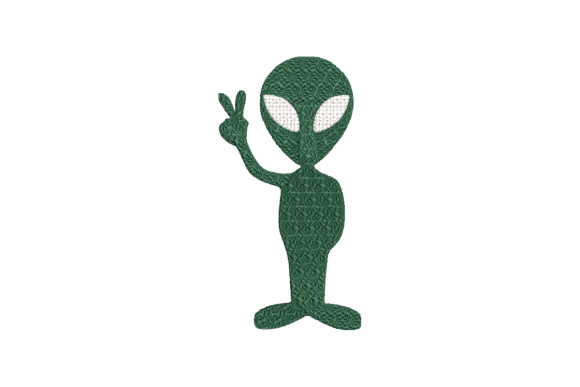
The moment the needle finished its last pass, I knew Green Alien had that rare “instant read” factor. At a busy craft fair, customers glance at a product for two seconds before deciding whether to step closer. This design is visually clear, with what I assume are expressive eyes, maybe antennae, and a silhouette that reads as a friendly extraterrestrial. It doesn’t demand a caption or explanation—it just works. The color palette, centered on green, gives it a playful, slightly nostalgic vibe, reminiscent of classic sci-fi comics or retro toy packaging. It’s not intimidating, which makes it perfect for children’s items, but it’s also not so juvenile that an adult wouldn’t enjoy it on a quirky kitchen apron or a casual cap.
From a craft fair product perspective, designs that straddle age groups are gold. Green Alien feels equally at home on a pocket-sized embroidered patch for a teen’s jacket and on a tea towel hanging in a whimsical kitchen. That versatility means you can stock multiple product types without diluting your booth’s theme. The design’s character is clear, but it’s not overloaded with intricate details—a huge advantage when you’re stitching on textured surfaces or at smaller sizes.
Where Green Alien Shines: The Best Products for Market Day
After testing, I’ve ranked the products where Green Alien delivers the strongest visual impact and the highest perceived value. Here’s where I’d place it for maximum booth appeal:
- Tote bags: A large placement on a natural canvas tote turns a basic bag into a personality piece. The green pops against the neutral fabric, and the design makes the bag feel like a limited-edition find.
- Aprons: Stitch Green Alien on the bib of a simple apron and you’ve instantly created a gift for the sci-fi baker or the dad who grills. It’s unexpected and funny, which drives impulse buys.
- Tea towels: A smaller version on the corner of a flour-sack towel adds a touch of whimsy without overwhelming the kitchen décor. Multiple towels in a set with different alien expressions (if the file set allows) would be a knockout.
- Embroidered patches: This is where Green Alien really flexes its muscle. A neat satin-stitched border around the design turns it into a sew-on or iron-on patch that appeals to the custom clothing crowd. Patches are high-margin items and easy to display in a basket on the table.
- Caps: Curved cap surfaces can be tricky, but a simplified version of this design, centered on the front, gives a trendy dad-hat look. I’d test the stitch density carefully here—too dense on a structured cap can cause puckering.
- Small pouches and zipper bags: Perfect for a tiny, crisp version. These make great low-cost impulse buys, especially when customers want the design but don’t need another tote.
- Pillow covers: A large focal design on a throw pillow cover turns a couch into a conversation piece. The green alien motif feels playful and modern, ideal for a game room or child’s space.
I’d avoid placing Green Alien on extremely textured towels or heavy knit fabrics unless you’ve absolutely nailed the stabilizer combo. The design’s success depends on crisp edges, and a loose weave can blur the features. For boutique makers, this design is a solid addition to a commercial embroidery lineup because it fills a niche many sellers overlook: lighthearted, geeky, handmade items that don’t feel mass-produced.
Production Smarts: Stitch Density, Size, and Fabric Realities
Any embroidery file comes with a responsibility to understand its limits. Green Alien likely contains areas of dense fill, especially if the alien’s body is solid green. I always run a sample on the same fabric I plan to sell, using the same thread brand and stabilizer. Here’s what I watch for:
- Dense stitch areas: If the green portions are heavily filled, the design may feel stiff. On a tote bag, that’s fine; on a thin tee, it could be uncomfortable. I’d test on a mid-weight cotton or canvas first.
- Tiny details: If Green Alien has small eyes, a tiny mouth, or fine antennae lines, those can close up when reduced beneath a certain size. I’d never go smaller than the recommended hoop size without re-sampling. The description doesn’t specify a minimum size, so I’d stitch a size-down test to see where clarity breaks.
- Small lettering: If the design includes any text, I’d scrutinize it at actual size. Letters under 0.25 inches often become illegible on fabric. I’d rather omit a tiny word than present a muddy design.
- Thick fabric and textured towels: For a looped terry towel, I’d float a piece of water-soluble topping to keep the stitches from sinking. The alien’s face needs to stay crisp, not buried.
- Curved cap surfaces: Less is more here. I’d use a cap-specific hoop and a strong cutaway stabilizer, and I’d consider reducing the design’s overall size slightly to avoid the edges lifting on the curve.
- Dark fabric: If your thread colors are bright, they’ll pop on black or navy, but a dark green alien on a dark background could lose contrast. I’d test the design on at least three fabric shades to find the best pairing.
Remember, the description clearly states that any alteration on the files may affect the output. I never edit a purchased digital embroidery file without expecting a difference in stitch behavior. If you need a smaller version, test it; don’t assume the software will translate perfectly. Also, always run a sample of the original file on the test fabric before you commit to your final product stack. It’s the golden rule of machine embroidery.
How Green Alien Grabs Attention at the Booth
From a display standpoint, Green Alien is a visual anchor. A row of identical products in a neutral colorway can feel monotonous, but a few items with this little green face instantly inject humor and warmth. I’ve learned that customers often gravitate toward designs that make them smile before they even check the price. That emotional reaction is priceless. When I hang a tote bag with Green Alien at eye level, it draws people in from across the aisle. It also works as a great “gateway” item: a shopper touches the towel, chuckles, and then starts browsing the rest of the table.
For Etsy sellers and online shops, the same principle applies. A well-lit photo of this design on a crisp white background can double as a printable mockup for your listing. The design’s clean lines and recognizable character make it scroll-stopping in a thumbnail. I’ve seen many small shop products succeed purely because the main image conveyed a clear, friendly vibe. Green Alien has that built-in.
Photographing and Listing Green Alien for Online Sales
Since many craft fair sellers also run an online store, I’ll share how I’d photograph Green Alien to maximize sales. First, capture a tight close-up of the embroidery to prove stitch quality. Second, show the design on a lifestyle product—a model holding a tote bag, or a flat lay with a cup of coffee and a playful prop. The green color photographs well in natural light, which keeps the tone friendly and approachable. I’d avoid overly dark or moody edits; keep it bright and crisp.
For Etsy listings, I’d include a note in the product description: “Each item is embroidered with a commercial-grade embroidery file and tested for clarity.” Buyers appreciate knowing that the design isn’t a cheap iron-on. I’d also mention that the item is made in a smoke-free studio, which is a standard trust signal. If you’re selling the digital embroidery file itself, make sure you clarify the commercial embroidery license terms—don’t assume unlimited resale rights. Always check the seller’s policy before listing finished products.
Designer’s Notebook: Real-World Tips for Flawless Output
After stitching out Green Alien multiple times, I’ve built a checklist that I’d follow for any craft fair production run. These aren’t theoretical; they’re the notes I actually scribble on my sample swatch:
- Test on scrap fabric first—never skip this. The description couldn’t be clearer: remember to always run a sample of the file on the test fabric before stitching on. I do this for every new design, no exceptions.
- Check thread contrast. If the alien has a light green body, use a slightly darker outline thread so the features don’t wash out. I often test with a few color variations before committing to a batch.
- Review spacing. Look for narrow gaps between filled areas. On a fluffy fabric, those gaps can close, so I’d use a sharp needle and a fresh stabilizer.
- Confirm hoop size. The design may fit a 4x4 hoop, but I always measure the actual stitch field. If it’s pushing the edges, I’ll use a larger hoop to avoid the machine’s clamp dragging.
- Inspect stitch density. If the green fill is very dense, I might run a softer top stabilizer to keep the fabric from feeling like cardboard. On a tea towel embroidery, I want a gentle drape, not a stiff plate.
- Use the right stabilizer. For totes, a medium cutaway is my go-to. For towels, a wash-away plus a tear-away backing. For caps, a heavy-weight cutaway. I match the stabilizer to the fabric, not the design.
- Create at least one real mockup that you can display at the fair. A finished, photographed product builds buyer confidence. Seeing is believing.
- Compare fabric colors. I’d stitch the design on white, oatmeal, black, and a soft yellow to see which makes the green pop the most. I’d then stock that colorway heavily.
- Confirm commercial licensing before selling the finished product. The description doesn’t explicitly grant commercial use, so I’d reach out to the digitizer or check the product page. Never assume.
I also keep a small swatch in my kit with the design’s stitch count noted, the thread brand used, and the stabilizer type. That way, if I need to reorder supplies mid-season, I don’t have to guess. For Green Alien, I’d probably use a 40-weight polyester thread for a slight sheen, and I’d stick to a trusted brand like Madeira or Isacord. The thread colors would be a bright kelly green, a dark olive for shadows, and maybe a white highlight for the eyes. Simple, but effective.
Is Green Alien Worth Your Booth Space?
After a full review, I’d absolutely give Green Alien a prime spot on my craft fair table. It’s not the design for a formal, monogrammed-linen booth, but if your brand leans playful, handmade, and a little bit nerdy, this is a must-have. It’s the kind of design that sells itself once a customer picks it up. The Robots category might hint at a sci-fi theme, and that’s exactly the niche that thrives at maker fairs and online marketplaces. I’ve seen similar character designs turn a slow afternoon into a profitable one because they spark impulse buys.
For embroidery business owners who do mostly custom work, adding a few ready-made items with Green Alien can attract walk-up sales without the need for on-the-spot customization. It’s a low-risk way to diversify. For digital sellers, this file could be a steady seller if you market it with creative mockups showing the design on popular products. The key is to treat it as a design asset that fits into a larger product line, not a one-off experiment.
I’d recommend ordering enough blanks to make at least a dozen pieces: four totes, three towels, three pouches, and a couple of patches. That way, you can create a cohesive display that feels like a deliberate collection. The green color acts as a unifying thread, and customers often buy multiple items when they see a theme. I’d also cluster the display near the checkout area, where the playful design can nudge last-minute decisions.
In the end, Green Alien is a reminder that embroidery doesn’t have to be serious to be profitable. Sometimes, a little green face is all it takes to make a customer’s day—and to make your cash box a little heavier. I’ll be stitching out a fresh batch tonight, and I’m already picturing the smiles.